
-
Handgeschmiedete Wikingeraxt mit verziertem Axtkopf und geschnitztem Stiel
Normaler Preis $206.99 USDNormaler Preis -
Damascus Steel Viking Battle Axe, 21.7 in (55 cm)
Normaler Preis $220.00 USDNormaler Preis -
Engravable Viking Bearded Axe with Wooden Gift Box, 20 in (51 cm)
Normaler Preis $249.00 USDNormaler Preis -
Eclipse Black Viking Axe, Hand-Forged with Runes, 18.5 in (47 cm)
Normaler Preis $199.00 USDNormaler Preis -
Wikinger-Bartaxt im Kratos-Stil, handgeschmiedet, 55 cm (21,6 Zoll)
Normaler Preis $185.00 USDNormaler Preis -
Wikinger-Langaxt „Ragnar Lodbrok“: handgeschmiedete zweihändige Axt
Normaler Preis $457.00 USDNormaler Preis -
Wikingeraxt „Svart Barbar“: handgeschmiedet aus AISI 1065, mit Scheide
Normaler Preis $219.00 USDNormaler Preis -
Handgeschmiedete, gehärtete Wikinger-Bartaxt „Fenrisulfr“ mit geschnitztem Stiel
Normaler Preis $281.00 USDNormaler Preis -
Handgefertigte Wikingeraxt „Ulfhednar-Krieger“: nordische Axt mit Fenrir-Schnitzerei
Normaler Preis $330.00 USDNormaler Preis -
Bjørn-Wikingeraxt: handgeschmiedete Runenaxt mit Lederschutz
Normaler Preis Von $284.00 USDNormaler Preis -
Fenrir-Wikingeraxt: geschnitzte Wolfsaxt aus Esche mit Lederscheide
Normaler Preis Von $330.00 USDNormaler Preis -
Othala-Wikingeraxt: handgeschmiedet, Eschenstiel mit Lederschutz
Normaler Preis Von $284.00 USDNormaler Preis -
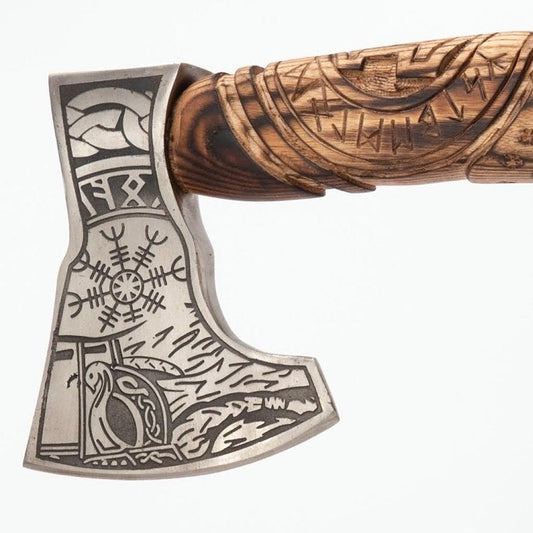
Handgefertigte Wikinger-Streitaxt mit graviertem Wolfskopf und Vegvísir
Normaler Preis $172.49 USDNormaler Preis










FRAGEN
Häufige Fragen
Did Vikings use swords or axes?
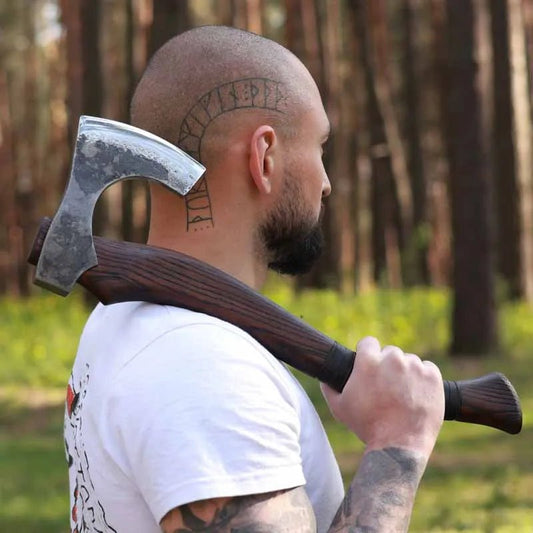
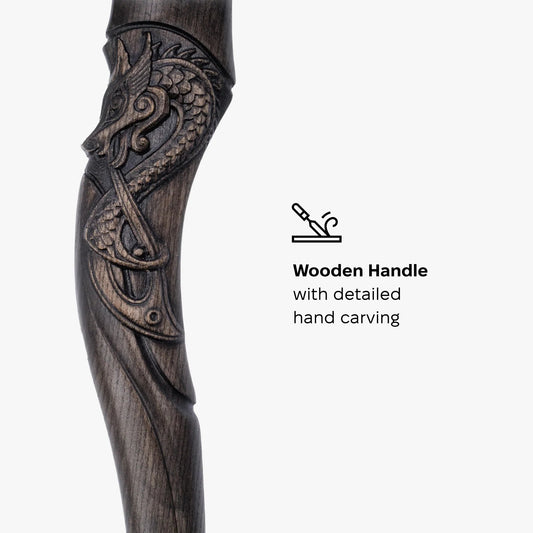
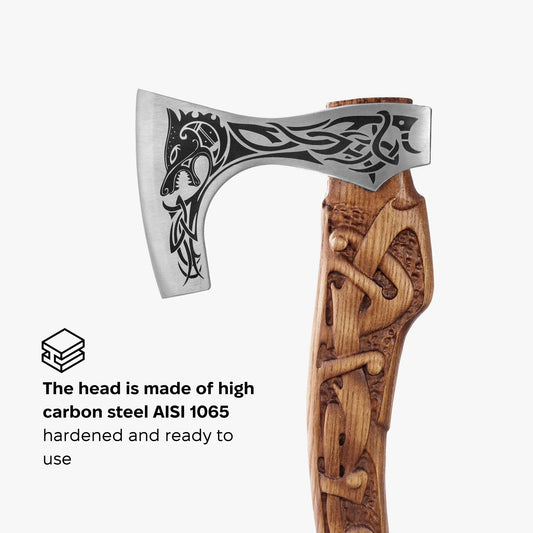
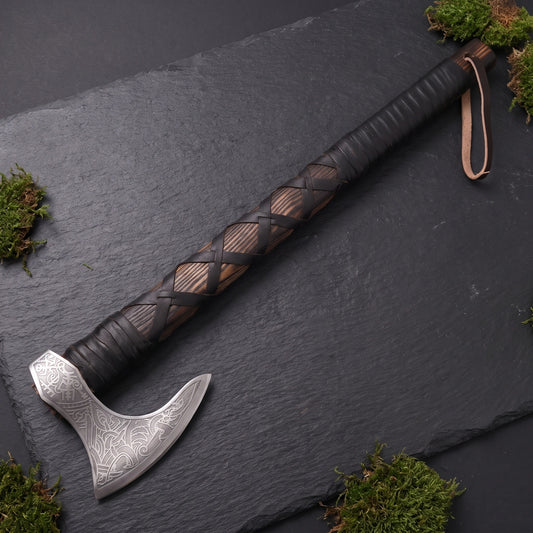
Axes were far more common. Most Viking households owned an axe, since it was both a tool for wood and a weapon, while a sword was costly and belonged to wealthier warriors. Our engraved axes are hand-forged, most of them in high-carbon steel with a hardwood haft.
What is a bearded axe?
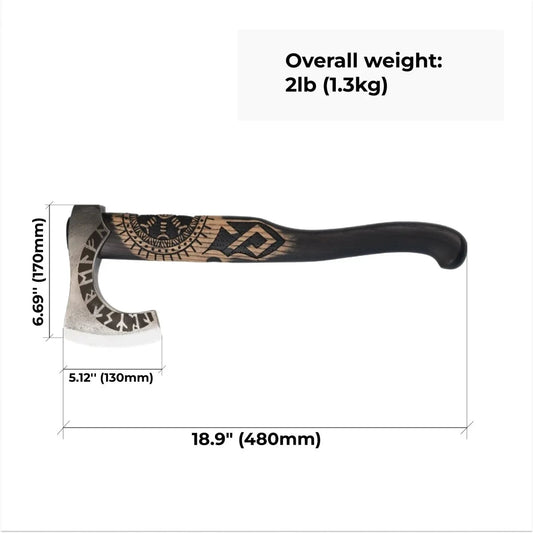
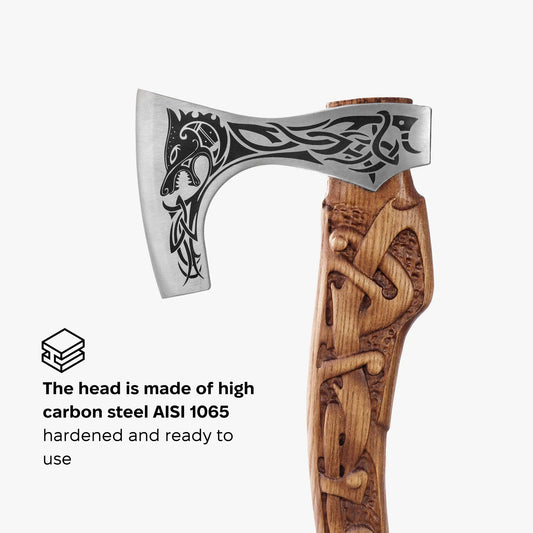
A bearded axe has a blade whose lower edge extends down into a hooked point, called the beard. The shape is common in Viking Age finds, and the Old Norse word for it is skeggøx, from skegg, a beard. Shorter-hafted bearded axes are easy to carry and swing, which suited both work and war.
What metal did Vikings use for weapons?
Iron. Viking weapons were forged from iron, and the better ones had a steel edge welded on or a blade that was carburized to harden it. Bronze was no longer used for weapons in the Viking Age. Most of our engraved axes are forged from high-carbon steel, which continues the same iron and steel tradition.