
Viking Hairstyles Throughout History

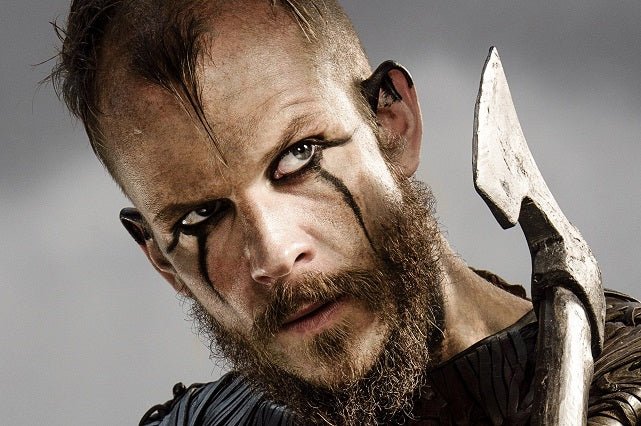
Viking hairstyles were practical and well groomed: men commonly wore their hair long on top and cropped or shaved at the neck, a style one Anglo-Saxon writer described as "bare neck and blinded eyes," while women braided long hair or tied it into a high knot. Combs are among the most common Viking Age grave finds.
That summary rests on a thin but genuinely interesting body of evidence: a few written complaints from outsiders, carvings and figurines, textile fragments, and thousands of combs recovered from graves. Below we go through what can actually be said about Viking braids, the Viking haircut for men, female Viking hairstyles, and Norse grooming habits. We will also be honest about where the evidence stops and where television takes over, because a lot of what gets called "Viking hair" online was invented by a costume department.
How Did Vikings Braid Their Hair?
Viking braids are best attested for women. Gotland picture stones, small metal pendants, and carvings repeatedly show women with long hair pulled back from the face, braided or twisted, then gathered into a knot at the back of the head. The style reads clearly even at the tiny scale of a pendant, which suggests it was a standard, recognizable way of wearing hair.

One well-known carving of a shieldmaiden shows fine, tight braids running the full length of the hair, finished with the hair literally tied into a knot behind the head. Whether that was everyday wear or something specific to battle is guesswork. The carving shows the style, not the occasion.
For men, braiding is much more weakly attested. Male figures in Viking Age art usually show shoulder-length loose hair and a trimmed beard, and the written sources describe cuts rather than braids. A braided beard or the odd braided lock is plausible, and practical at sea, but if you want the male style with the strongest historical backing, it is a haircut, not a braid.
The practicality argument matters here. Anyone rowing, weaving, fighting, or cooking over an open hearth needs hair out of the way, and daily life in the Viking Age involved all four. A braid or a knot solves the problem with no tools, which goes a long way toward explaining why gathered styles dominate the surviving images.
What Was the Viking Haircut for Men?
There was no single regulation Viking haircut. Art and grave finds point to variety: shoulder-length hair, short crops, and combinations of long and shaved sections. Two written sources get quoted in every article on this subject, and both deserve a closer, more honest look.
"Bare Neck and Blinded Eyes": Aelfric of Eynsham
Aelfric of Eynsham, an English abbot writing around the year 1000, scolds a man named Edward in a letter for abandoning English customs and "dressing yourself as a Dane, with bare neck and blinded eyes." Historians read this as hair worn long at the front, hanging toward the eyes, with the neck and the back of the head shaved. Modern writers nickname it the reverse mullet.
Aelfric was hardly a neutral observer. Viking raiders targeted monasteries, and he plainly despised the fashion he was describing. But that is exactly what makes the letter useful: he was complaining about a real style that an Englishman could copy in his own day, which means the style existed and was recognizably Danish. Why men cut their hair this way was never recorded; suggestions about helmet comfort or streamlining for battle are modern guesses. Facial hair had its own conventions, which we cover separately in our guide to Viking beard styles.
Leo the Deacon's Famous Sidelock: Read the Context
The other quote you will see everywhere comes from Leo the Deacon, a Byzantine historian. Describing a truce meeting on the Danube in 971, he writes that the leader on the other side had a clean-shaven head except for a lock of hair on one side, a mark of his noble rank, and wore a single gold earring.
Here is the context most articles skip: the man being described is Prince Sviatoslav of the Kievan Rus. His dynasty had Scandinavian roots, but by his generation the Rus elite ruled a largely Slavic world with customs of its own. Leo was also writing roughly twenty years after the meeting, and it is not certain he witnessed it himself. The sidelock is a genuine period description of a Rus prince. Treating it as proof of how Danish or Norwegian raiders wore their hair stretches the source further than it can go.
Female Viking Hairstyles: Buns, Knots, and Braids

Viking women wore their hair long, and almost every depiction shows it gathered rather than loose. That fits the workload. Women ran farms and households and produced every piece of the family's Viking clothing by hand, and long loose hair is a liability at a loom or a hearth. Textile research shows Viking Age Scandinavians followed changing fashions in color, fur, and silk, so it is no surprise their hair was deliberate too.
The Valkyrie Figurines and the Oseberg Tapestry
The clearest images we have are small. The Hårby figurine, a gilded silver piece from Denmark dated to around 800, shows a woman holding a sword and shield with her hair drawn back into a long ponytail twisted into a knot. Other so-called valkyrie pendants and picture-stone figures repeat the same knotted style, sometimes with a tail of hair hanging below the knot.

The Oseberg ship burial, dated by tree rings to 834, held two women and the fragmentary Oseberg tapestry. Its rows of small woven figures include women with long gathered hair, though many figures wear caps or other headgear that hides the hair entirely. Head coverings for married women were probably common, as they were across medieval Europe, but how strict that custom was in pagan Scandinavia is honestly unknown.
The Birka Warrior (Bj581)

Grave Bj581 at Birka, Sweden, was excavated in 1878 and assumed for nearly 140 years to hold a man. It contained a full set of weapons, two horses, and a gaming set of the kind linked to command and tactics. A 2017 DNA study showed the skeleton is female.
Bj581 tells us nothing directly about hair; none survived. Its relevance is narrower: it shows a woman buried with warrior equipment and high status, which makes the warrior-coded images of women, tight braids and all, harder to dismiss as pure myth. Whether the woman in Bj581 fought in life is still debated among archaeologists, and any honest article should say so.
How Do We Know Vikings Cared About Grooming?
Archaeology answers this one loudly. Combs of antler and bone, often carved and fitted with protective cases, turn up in Viking Age graves constantly, alongside tweezers, razors, and ear spoons. In Children of Ash and Elm, archaeologist Neil Price describes combs and their protective cases as standard personal kit found across the Viking world. People were buried with them, which tells you what they were worth to their owners.

The comb habit is older than the Viking Age itself. A comb from Vimose in Denmark, dated to around 160 AD, carries the oldest known runic inscription, reading "harja," possibly a name or a word for warrior. The earliest surviving runes in Scandinavia sit on a grooming tool. That is not a coincidence you can ignore.

Written sources agree. A 13th-century chronicle attributed to John of Wallingford, describing Danes living in England around 1002, complains that they "combed their hair every day, bathed every Saturday, and changed their garments often," and that this made them dangerously attractive to English women. One honest caveat: the chronicle was written some two centuries after the events, so it preserves a tradition rather than an eyewitness report. Even so, it matches what keeps coming out of the ground.
A 10th-century traveler from al-Andalus, Ibrahim ibn Ya'qub al-Tartushi, adds a detail from the trading town of Hedeby: both men and women there wore a makeup that enhanced the beauty of their eyes. His original account is lost and survives only as quotations in a much later Arabic compilation, so the wording comes to us secondhand, but the detail is specific and widely accepted. Between the combs, the tweezers, and the eye makeup, the filthy-barbarian image collapses. That image owes more to the fear of raided communities, and to later fantasy art, than to anything found in a Viking grave.
Did Vikings Bleach Their Hair?
Maybe, but this claim needs more honesty than it usually gets. The source most articles cite is Pliny the Elder, and Pliny wrote in the first century AD, roughly 700 years before the Viking Age. His famous passage describes soap as a Gaulish invention used to redden the hair, "used more by men than women" among the Germanic peoples of his own time. That is evidence about Gauls and early Germanic tribes, not about Vikings.
For the Viking Age itself, no written source describes hair bleaching. The idea survives because it is chemically plausible: Scandinavian soap was made with wood-ash lye, strong lye soap lightens hair with repeated use, and it also kills lice, which alone would justify using it. Add the traveler Ibn Fadlan's 922 description of Rus traders as blond and ruddy, and you get a reasonable inference that some Norse men lightened their hair with lye soap. An inference is all it is, though. Any article presenting Viking hair bleaching as settled fact is overselling the evidence.
Which "Viking" Hairstyles Did TV Invent?

Ragnar's undercut, shaved sides with the top braided back, comes from the History Channel's Vikings (2013). It is a costume design choice. No Viking Age carving, figurine, or text shows it, and Aelfric's reverse mullet is close to its opposite: long at the front, bare at the back.
Dreadlocks sit in the same category. No Norse text or Viking Age image shows them, and a population that carried fine-toothed combs as universal possessions is a poor candidate for them. Claims about "Viking dreadlocks" usually trace back to Roman descriptions of entirely different peoples.
One real style often mislabeled as Viking is the Suebian knot, hair twisted into a tight knot at the side of the head. It is genuinely ancient Germanic, described by Tacitus and preserved on the Osterby bog head, but it dates to the first centuries AD, several hundred years before the first Viking raid.
None of this makes the shows bad television. It just means "historically attested" and "looks great on screen" are different categories, and this article stays in the first one.
Keep exploring: place these styles in context with our Viking history timeline, see what the same graves tell us about clothing and fashion, or browse jewelry modeled on real Viking finds.
Viking Hairstyles FAQ
How did Vikings braid their hair?
The direct evidence is mostly visual and mostly female. Carvings, picture stones, and figurines show women's long hair braided or twisted, then gathered into a knot at the back of the head. For men, loose shoulder-length hair is depicted far more often than braids, so elaborate male braiding is plausible but weakly attested.
What is a Viking haircut called?
No Old Norse name for a haircut survives. The best documented male style comes from Aelfric of Eynsham's letter describing Danes with a bare neck and a long fringe, which modern historians nickname the reverse mullet. The "Viking undercut" is a modern barbering term, not a historical one.
Did Vikings have dreadlocks?
There is no Viking Age evidence for dreadlocks. No Norse text, carving, or grave find shows them, and the fine-toothed combs found in graves across Scandinavia point to regularly combed hair. The claim usually borrows from Roman descriptions of other peoples or from television.
How did Viking women wear their hair?
Long, and almost always gathered. Figurines like the Hårby valkyrie and the Oseberg tapestry fragments show ponytails twisted into knots, buns, and braids. Married women probably covered their hair with caps or headscarves at least some of the time, though how strict that custom was is uncertain.
Did Vikings bleach their hair blond?
Possibly, but no Viking Age source says so directly. Pliny the Elder describes Gauls reddening hair with soap some 700 years earlier, and strong lye soap does lighten hair with repeated use, so bleaching is a reasonable inference from the soap Vikings made rather than an attested practice.
Were Vikings clean or dirty?
Cleaner than their reputation. Combs are among the most common Viking grave finds, alongside tweezers, razors, and ear spoons, and a 13th-century chronicle attributed to John of Wallingford complains that Danes in England combed daily, bathed every Saturday, and changed clothes often enough to charm English women.