
The God Thor: Norse Mythology

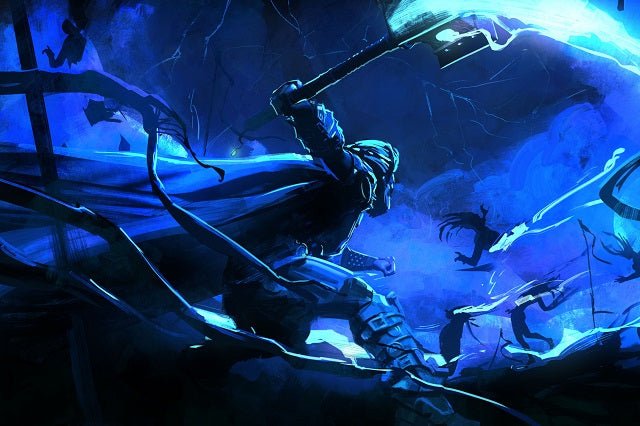
Thor is the Norse god of thunder, storms and strength: the son of Odin and the earth goddess Jörð, wielder of the hammer Mjölnir, and the protector of gods and humans against the giants. He is the best-attested god of the Viking Age, and comparative linguists trace his type back some six thousand years to a reconstructed Indo-European thunder god, Perkwunos.
Of all the gods in the Norse pantheon, Thor is likely the most influential. His father, Odin, holds a more important place among the order of the gods, but Thor resonated with the hearts and minds of ancient Scandinavia in a very personal way.
If you're not familiar with Thor, you're in the right place. This article covers the whole story: who Thor is in Norse mythology, his family, his goats and his three great treasures, how Mjölnir was really forged, his death at Ragnarök, and the deep history behind him. This is also a great place to be if you've only crossed paths with Thor's hammer in the Marvel Universe.
We're taking the long way, looking at the politics, cultures, and mythologies that carried Thor over the last six thousand years or so. If you're just looking to understand who Thor is in the context of Norse mythology, skip down to the section "Who is Thor in Norse Mythology?"
There are thousands of years of history behind the superhero we now see on the silver screen. So, clank your hammers and look to the heavens because we're about to unpack the history of the sky god Thor.
Thor's Cultural-Historical Origin
Those looking for a full appreciation of Thor's significance should look at his historical context. Thor starts to emerge earlier and earlier in history as you look closer at Indo-European history. We'll look at the cultural and political roots of Norse mythology, seeing how the converging mythologies of ancient Europe might have merged to create the Norse pantheon.
Let's backtrack through some European and proto-European history, referencing the respective mythologies as we go. It's important to go through political factors that influenced migration and cultural changes.
The following sections don't focus solely on Thor. Instead, they guide us toward his origins in a way that allows us to appreciate his scope and persistence throughout time.

Norse Mythology in The Viking Age
Norse mythology encompasses the dominant beliefs of pre-Christian Scandinavians and Northern Germanic Peoples. It's an evolution of the paganism of Iron-Age Germanic peoples. The Scandinavian Iron Age ran from roughly the 6th century B.C. to the start of the Viking Age at the end of the 8th century A.D.
The Viking Age is marked by the first recorded raids on the coasts of Christian lands to the west, such as the attack on the monastery of Lindisfarne in 793. Scandinavians colonized many small pieces of land, using them for agricultural plots and strategic trade points. They stretched throughout Europe during this time.
Scandinavians were already sailing and fighting around the Baltic before then: the Salme ship burials in Estonia date from the middle of the 8th century. What marks the Viking Age is extensive successful raiding to the west. The usual dates run from the 790s to the middle of the 11th century.
The consequent wealth allowed Vikings to prosper and enjoy their religion without significant persecution. This would change soon, however.
Christianization
In the 11th century, European groups started to organize and provide better defenses against these maritime raiders. Further, Scandinavians had integrated with other European groups and Christianity started to penetrate Norse culture. These factors contributed to the end of the Viking Age.
This period is the high point of Norse mythology's prevalence and importance, and most of our evidence for it comes from this time. The religion had existed for hundreds of years before, but Scandinavian expansion spread it widely. Scholars call it "Old Norse religion" or "Norse paganism"; those are modern labels, not names its followers used.
The thunder god himself is far older than the Viking Age. Roman writers already describe Germanic peoples sacrificing to him under a Roman name, a runic inscription on the Nordendorf brooch from Bavaria, from around 600, is often read as naming him as Donar (the reading is debated), and the Old Saxon baptismal vow makes converts renounce Thunaer, Woden and Saxnot. As we move further back in time, you'll see that gods like Thor held important positions in many related mythologies, even though people called them by different names.
Distribution of Germanic Peoples

The Migration Period, roughly A.D. 375 to 568, saw the collapse of the Western Roman Empire (its last emperor was deposed in 476) and a restructuring of European peoples that played an important role in the spread of Germanic paganism. Rome controlled most of western and southern Europe, though never Scandinavia, and its collapse allowed whole peoples to relocate, organize, and start to form the shape of Europe as we now know it.
A big chunk of that population was what we now refer to as the "Germanic peoples." These were individuals that lived in Central Europe and Scandinavia during antiquity. It's important to note that "Germanic" people didn't necessarily have a shared nationality or identity. They might not have seen themselves as parts of a unified group.
Their geographic proximity is one thing that unites them; language is the other. They spoke Germanic dialects descended from a common ancestor, Proto-Germanic. No one wrote Proto-Germanic down, but linguists reconstruct it by comparing its daughter languages, and the oldest runic inscriptions, from the 2nd century A.D., are already close to it.
So, while they all might have sounded a little different, they would often have been able to understand each other. It's from these dialects that all modern Germanic languages derive, including English, German, Dutch, Norwegian, Swedish, Danish and Icelandic.
Germanic groups fought against Roman rule for centuries and played a large part in the collapse of the western empire.
Long before the Germanic peoples were battling with Romans, smaller groups of their ancient relatives were conjuring up their versions of the gods.
Proto-Indo-Europeans: The Predecessors of The Germanic Peoples

The Proto-Indo-Europeans are a reconstructed people. They left no writing, so we know them from their language, which linguists rebuild by comparing its descendants. Most scholars link them with herding cultures of the steppe such as the Yamnaya.
Estimates usually place them between about 4,500 B.C. and 2,500 B.C. Their homeland was most likely modern Ukraine and southern Russia, and their languages spread into Europe, Iran, Central Asia and India.
Proto-Indo-Europeans existed before, or at the very start of, true writing, which first appeared in Mesopotamia and Egypt shortly before 3,000 B.C. True writing is distinct from proto-writing, which uses images and symbols that do not record a full language.
That means that there isn't any written evidence of their beliefs. There are ways to glean insights into their mythologies, however.
Finding Ancient Commonalities
Linguists and historians have taken a number of insights from the similarities of Indo-European languages that followed. The thinking is that any cultural details shared among the direct descendants of the Proto-Indo-European people must have come from the original language.
The same is true for the traditions that followed the original culture. Piecing linguistic and cultural evidence together has allowed researchers to create a rough sketch of the pantheon of Proto-Indo-European gods.
Proto-Indo-European Mythology
Reconstructed ideas of Proto-Indo-European mythology point to a daylight sky god (Dyēus) and an earth mother who produce secondary deities as children.
These include a dawn goddess daughter and divine twin sons. There is also an additional solar goddess and a few other confirmed individuals that contribute to the pantheon.
Note that Dyēus is related to the Latin deus, "god," and dies, "day," because Dyēus was the god of the bright daytime sky. The names Zeus and Jupiter (from Dyēus pater, "Sky Father") come from him too, and so, through the related word for "god," does the name of the Norse god Týr. English "day" is a different word.
These foundational Gods distributed widely and mutated as they went. We now find traces of this language and mythology in Celtic, Greek, Roman, Norse, Albanian, and many other cultures. The sky father reached the Indian subcontinent as well: the Vedic hymns call him Dyaus Pitā.
In terms of our discussion, the most important god in this set is someone named Perkwunos.
Perkwunos, The Original Thunder God
Perkwunos is usually explained as "the Striker," or as "the god of the oak," from an old word for oak.
Scholars reconstruct him as a weather god, linked with the rain that farmers needed for their crops, so people probably called out to Perkwunos in times of drought.
As the bringer of rain, he was also the bringer of lightning and thunder, and his link with oaks may come from these tall trees being among the most often struck in lightning storms.
Some reconstructions also connect his weapon with an old word for stone, which may have named the stony vault of the sky as well. In that picture the thunderbolt is a stone weapon thrown from heaven.
Battling Serpents with Mighty Tools
The thunder god's best-known deed is a fight with a monstrous snake. Myths from across the Indo-European world tell of a storm god killing a serpent, and the serpent often hoards or blocks the waters, which are released when it dies: in the Rigveda, Indra kills the serpent Vṛtra and sets the rivers flowing.
Perkwunos fights the snake wielding his weapon, and Thor's hammer may keep an echo of it. Linguists explain the name Mjölnir in two ways: as "grinder" or "crusher," from the verb mala, "to grind," or as a relative of old words for lightning, such as Russian molniya and Welsh mellt.
This description contains numerous aspects that are central to Thor's mythology.
We'll explore the connections between Perkwunos and Thor before moving forward and describing Thor's specific role in Norse mythology.
First, though, it's worth noting that Perkwunos' influence rippled out into a few other mythologies of note, rippling through time in ways that might surprise you. Let's look at those other key evolutions of Perkwunos.
Jupiter, Zeus, Hercules, Indra

Jupiter is the ancient Roman god of the sky and thunder and was the chief god of the Roman state. His Greek equivalent was Zeus, who also throws the thunderbolt. Both names come from Dyēus, the sky father, rather than from Perkwunos, but both took over the thunder god's weapon.
The hero Hercules (Greek Heracles), son of Jupiter, is also attributed with numerous Thor-like qualities. Hercules strangles two snakes in his cradle, which recalls Thor's lifelong feud with the World Serpent on a much smaller scale.
Later, Hercules would battle Hydra (multi-headed snake) with his iconic club.
The Romans saw the likeness themselves. Tacitus, writing about the Germans in A.D. 98, says they worship Mercury above all other gods and appease Hercules and Mars with animal sacrifices, and scholars usually read his Hercules as the Germanic thunder god.
There's evidence in the ground too. Small pendants shaped like Hercules' club turn up in Germanic graves from the late Roman period onwards, and the archaeologist Joachim Werner read them as early Donar amulets, "Donar" being the continental German name for Thor. Whether they are true forerunners of the Thor's hammer pendants, which belong to the Viking Age centuries later, is still debated.

CHECK OUT OUR COLLECTION OF THORS HAMMER
*The German word for "Thursday" is "Donnerstag," "Donar's day" or "thunder's day," so in German as in English, Thursday is the thunder god's day.
So Hercules did not grow out of Perkwunos. The link runs the other way: when Romans and Germanic peoples met, the club-carrying strongman and the hammer-carrying thunder god looked enough alike for the two to be matched.
To the southeast, we find the god Indra. Indra is the chief god of the Rigveda, the oldest scripture of Hinduism, which is another extension of Proto-Indo-European mythology. He is the god of thunder, lightning, weather and war, and he wields the thunderbolt, the vajra.
The closest namesakes of Perkwunos are the Lithuanian thunder god Perkūnas and the Slavic Perun. In Old Norse the name may survive as Fjörgyn, a poetic name for Thor's own mother: Völuspá calls Thor "Fjörgyn's son."
Who Is Thor in Norse Mythology?
To those of you who skipped ahead, this is the point where we discuss Thor, specifically.
To those who stuck it out, Skål! Let's dive deeper.
In relation to Germanic Paganism and Norse Mythology, Thor is the god of thunder, strength and protection. Around 1075 Adam of Bremen wrote that in the temple at Uppsala Thor, "the mightiest of them," sat enthroned between Wodan and Fricco and ruled the air, thunder and lightning, wind and rain, fair weather and crops. In the myths his job is to protect gods and humans from the giants, and his great enemy is the World Serpent, Jörmungandr.
That does not make Perkwunos and Thor one and the same. Thor's name is a different word, Proto-Germanic *Þunraz, "thunder," but his role follows the old pattern closely: the thunder, the weapon and the serpent are all there.
Many of the gods that descend from the old thunder god changed along the way. Thor kept more of the core story than most, along with his Baltic and Slavic cousins Perkūnas and Perun.
His name carries that history too. Thor (Old Norse Þórr) comes from a root meaning thunder, and it still echoes in our calendar: the Old English þunresdæg, "Thunor's day," is the Thursday we use now. Its modern shape owes something to the Norse form, Þórsdagr, and both translate the Latin dies Iovis, "Jupiter's day."
Enough with the ancient history, though. Let's dig into the Norse myth specifically. Who is Thor? What does he do to help humanity and the gods? What is Thor's Hammer?
Let's take a look.
Son of Odin
Thor is the son of Odin, the principal god of Norse Mythology. Snorri Sturluson says Jörð, "Earth," was both Odin's daughter and his wife, and that Thor was the first son Odin had with her.
No source has Odin hand Thor a mission, but the poems give him one anyway. Völuspá calls him Miðgarðs véurr, "Midgard's defender," and Snorri's Skáldskaparmál lists names for him such as defender of Asgard and of Midgard, and enemy and slayer of giants and troll-women. Midgard, the "middle enclosure," is the world where humans live.
The poems speak of nine worlds, but no medieval text lists them, and the sources do not stack them on top of one another. In Snorri's Edda the earth is round with a deep sea around it; the giants live on the shore, Midgard lies inside a wall made from the giant Ymir's eyebrows, and the gods built Asgard in the middle of the world. The picture of nine realms stacked up the World Tree, Yggdrasil, with Asgard at the top, is a modern diagram.
Asgard is the home of the gods, and Thor is charged with its protection as well. As a result, most of the tales about Thor detail his battles with giants. When a giant builder came close to winning the sun, the moon and the goddess Freyja as payment for Asgard's wall, Thor was away in the east fighting trolls; the gods called his name, he came at once, and Mjölnir settled the matter. Thor's fight with the World Serpent is the most notable of these battles.
Thor's Family
Thor's mother is Jörð, and through Odin his half-brothers include Baldr, Höðr, Váli and Víðarr. His wife is the golden-haired goddess Sif, the mother of his daughter Þrúðr, and Sif's son Ullr is Thor's stepson. With the giantess Járnsaxa he fathered Magni, and he has another son, Móði, whose mother the sources do not name.
Thor's realm is Þrúðvangar, "fields of strength" (Grímnismál calls it Þrúðheimr, "place of might"), and his hall is Bilskirnir. Grímnismál gives it five hundred and forty rooms and calls it the greatest roofed house Odin knows; Snorri calls it the largest house known to men. Two young servants, the girl Röskva and the boy Þjálfi, travel at his side.
Thor's Chariot and Goats

Thor's Battle Against the Jötnar, Mårten Eskil Winge, 1872 (Wikimedia Commons)
_by_M%C3%A5rten_Eskil_Winge.jpg)
Thor's chariot is drawn by two goats, Tanngnjóstr and Tanngrisnir (roughly "teeth grinder" and "teeth barer"), which is why Snorri says he is also called Öku-Þórr, "Driving Thor." Yet Grímnismál says that when Thor goes each day to sit in judgment at the ash Yggdrasil, he wades the rivers Körmt, Örmt and the two Kerlaugar on foot, for the gods' bridge burns with flame; Snorri adds that the other gods ride over Bifröst. The two goats became one of Thor's clearest symbols, and they still appear on Norse jewellery today, like our Thor's goats necklace.
Thor's Three Treasures
Thor carries three great possessions, each adding to his already immense strength. He wears a belt of power called Megingjörð, from the Old Norse megin (power) and gjörð (belt); when he buckles it on, Snorri says, his divine strength grows by half. His iron gloves, called Járngreipr ("iron grips") in Skáldskaparmál, are just as vital: according to Gylfaginning, Thor cannot do without them when he grips the hammer's shaft.
And then there is the hammer itself.
Mjölnir: Thor's Mighty Hammer
Runestones, amulets and personal names all suggest that Thor was an extremely popular god.
In contrast to some of the other gods, who worked through cunning, magic or quiet counsel, Thor rode out in a chariot pulled by goats and settled things with his hammer. Snorri says the frost giants and mountain giants know Mjölnir the moment it is raised, and no wonder, since it has smashed the skulls of many of their fathers and kinsmen.
He was popular because he was admirable. Thor would've been the type of person that a Viking-age individual could respect. As a result, there are tiny Thor's hammer pendants found in gravesites, his name built into personal names, and more.
Mjölnir never misses its target, always returns to Thor's hand, and can shrink small enough to carry inside his shirt. It hallows as well as kills: Thor hallows Baldr's funeral pyre with it, raises his goats back to life by hallowing their hides, and in Þrymskviða the giant Þrymr calls for the hammer to be laid in the bride's lap to hallow the wedding. The original Mjölnir was made by dwarves.
How Mjölnir Was Made
The story, told in Skáldskaparmál, begins with Loki. Out of mischief he cut off all the golden hair of Thor's wife, Sif. Thor was ready to break every bone in his body, so Loki swore he would get the black elves to make Sif new hair of gold that would grow like real hair. He went to the dwarves called the sons of Ívaldi, and they forged the hair along with two other treasures: Gungnir, the spear that never stops in its thrust, and Skíðblaðnir, a ship that gets a fair wind as soon as its sail is raised and folds up like a cloth small enough to fit in a pouch.
True to his nature, Loki could not resist a wager. He bet his own head with a dwarf named Brokkr that Brokkr's brother could not forge three treasures as good. The brother is called Eitri in the Codex Wormianus manuscript of Snorri's Edda; in the Codex Regius the name was left blank and later filled in as Sindri. As they worked, a fly, usually taken to be Loki in disguise, bit Brokkr at the bellows: first on the hand, then on the neck, then between the eyes, until blood ran into them and he let go of the bellows for a moment to swat it. Only that last bite did harm, which is why the third piece came out with one flaw: a handle a little too short. That piece was Mjölnir. The brothers also forged Gullinbursti, a golden boar that runs over air and sea and lights the dark with its bristles, and Draupnir, a ring that drips eight new golden rings every ninth night.
Back in Asgard the gods sat in judgment on the treasures: Odin took Gungnir and Draupnir, Freyr took Gullinbursti and Skíðblaðnir, and Thor received Sif's new hair and the mighty Mjölnir. They judged the hammer the best of them all and the greatest defence against the frost giants, so Brokkr won the bet. Loki argued that he had wagered his head but not his neck, and Brokkr settled for sewing his lips shut.
From Creation to Ragnarok & Thor's Final Revenge
Norse mythology is one of the few mythologies that are relatively easy to understand. We're often presented with various descriptions and accounts about how things came to be and given dozens of interpretations of those accounts.
The Eddas
In the case of Norse gods, most of the stories come from two Icelandic books, the Poetic Edda and the Prose Edda. They mostly tell the same stories, but they disagree in details, as the fishing trip below shows.
The Poetic Edda is a collection of poems that survives in one main manuscript, the Codex Regius, written in Iceland around 1270, though many of its poems are much older. The Prose Edda was written by the Icelandic chieftain and historian Snorri Sturluson around 1220, drawing on many of the same poems. Both were written down in Christian Iceland, more than two centuries after the conversion. They are not the earliest evidence, though: skaldic poems from the 9th and 10th centuries already tell of Thor fishing for the serpent, and the Altuna runestone in Sweden carves the same scene.
Here's the general arc of the story:
Ginnungagap and The Creation of Ymir
Before any beings occupied the universe, there was a great void in the cosmos. This void was called "Ginnungagap."
To the north of the void lay Niflheim, the world of ice and cold, and to the south Muspelheim, the world of fire.
Rivers flowing out of Niflheim froze into layers of rime in the northern part of the void, while sparks and warm air came from Muspelheim in the south. Where the rime met the warm air, it melted and dripped.
From those drops came the first being, named Ymir. He was a giant, and he fed on the four rivers of milk that flowed from the cow Auðumbla.
Ymir produced children without a partner: a man and a woman grew under his left arm, and one of his legs begot a son with the other. These children would go on to populate the world of giants, and giants later married into the families of the gods.
The Creation of Earth
As Auðumbla nourishes Ymir, she licks the salty blocks of rime, slowly uncovering another man from inside them. This was Buri, who would become the grandfather of Odin. Odin and his brothers Vili and Vé went on to kill Ymir, using various aspects of his body to create the Earth.
His blood became the sea and the lakes, his flesh the earth, his bones the rocks, his hair the trees, his skull the sky and his brains the clouds. Inside a wall made from his eyebrows the gods set Midgard, where humans live and worship the gods.
The poems also speak of nine worlds, and Snorri says Hel was given rule over nine worlds, but no medieval text lists them. The familiar list of nine realms around Yggdrasil, home to gods, elves, dwarves, giants and the dead, is a modern assembly from names scattered through the sources.
There's a lot that happens, amongst the gods, but the key narrative involves Ragnarok. Ragnarök (Old Norse ragna rök) means "the fate of the gods" and refers to the end times; the familiar "twilight of the gods" comes from a variant form, ragnarökkr, used in Lokasenna and by Snorri. Most gods will die in the end times, and Ragnarok marks the beginning of a new age.
The trickster god Loki and his children play very important roles here.
Loki, Jörmungandr, & Fenrir
Loki's children are part and parcel of the beginning of Ragnarok. In particular, his son Jörmungandr plays a massive role.
The gods learned from prophecies that Loki's three children with the giantess Angrboða would bring them great harm, so Odin had them brought to him and threw the serpent into the deep sea that lies around all lands. There it grew until it encircled the whole earth, biting its own tail.
Jörmungandr is less a character than a force of nature. He never speaks in the sources; he's just a giant snake with the demeanor of, well, a snake!
He meets Thor three times: disguised as a giant cat that Thor tries to lift in the hall of Útgarða-Loki, on the end of Thor's fishing line, and at Ragnarök. The rest of the time he lies in the ocean wrapped around the earth with his tail in his mouth.
The Summoning of Ragnarok
Snorri describes the start of Ragnarök like this. First come three winters of war, then the Fimbulwinter, three winters in a row with no summer between them. Wolves swallow the sun and the moon, the stars vanish, and the whole earth shakes so hard that trees are uprooted, mountains fall and every fetter breaks.
Then the sea surges over the land, because the World Serpent writhes in giant fury and heads for the shore. Nothing in the sources says he starts Ragnarök by letting go of his tail; that detail is modern. Jörmungandr blows so much poison that it spatters the sky and the sea, Fenrir (Loki's monstrous wolf son) breaks loose and will swallow Odin, and Thor moves to take on the giant snake as his last act of greatness.
Thor and Jörmungandr are sworn enemies. Their best-known meeting before the end is told twice, once in a poem and once by Snorri, and it is a little comical.
The Fishing Trip
In the Eddic poem Hymiskviða, the trip begins at a feast.
The gods were feasting with the sea giant Ægir, who told Thor to bring him a cauldron big enough to brew ale for them all. None of the gods had one.
The god Týr knew of the right pot: his father, the giant Hymir, owned a cauldron a league deep and lived east of the rivers Élivágar, at the edge of heaven. Thor and Týr set out to fetch it.
When they arrived, Hymir had three bulls slaughtered for supper. Thor ate two of them by himself, which worried Hymir enough to say that from now on they would have to live on what they caught.
Thor offered to row out to sea if the giant gave him bait, so he tore the head off one of Hymir's oxen. Out on the water he wanted to row further than Hymir cared to go.
Hymir hauled up two whales at once. Meanwhile, in the stern, Thor was quietly readying his own line.
He slipped the ox head onto a hook and dropped it into the water.
The serpent that encircles all lands took the bait. In the poem, Thor hauls the poison-streaked serpent up to the side of the boat and hammers it on the head; the rocks roar, the old earth shudders, and the serpent sinks back into the sea.
Snorri tells it with more drama. Thor went alone, disguised as a young lad, and the ox he beheaded was Hymir's biggest, Himinhrjóðr. When the serpent bit, it jerked so hard that Thor's fists slammed against the gunwale. He braced so hard that his feet went through the bottom of the boat and stood on the sea floor, and he drew the serpent up until the two glared at each other while it blew poison.
Hymir went pale with fear at the sight of the serpent and the sea pouring in and out of the boat. Just as Thor raised his hammer, the giant cut the line, and the serpent sank. Thor threw the hammer after it; some say it struck off the serpent's head, but Snorri's narrator thinks the serpent lives on in the sea.
Thor punched Hymir so hard that he went overboard heels first, and then waded back to land.
Thor and Jörmungandr Battle During Ragnarok
When Ragnarok is in full swing, all manner of evil beasts and foes of the gods will be fighting in the chaos of an unsteady cosmos.
Odin is swallowed, the earth is flooded, and the battle rages on. Thor is destined to seek Jörmungandr and battle him once and for all. Thor and Jörmungandr encounter one another and have one last battle.
Thor pulls out Mjölnir and strikes the serpent dead. But the serpent has blown its poison over him, so Thor, in the wake of his victory, takes nine paces and falls dead to the ground.
He takes his last breaths, and this great hero of the ages dies.
Ragnarok Is Yet to Come
In Völuspá the seeress tells Ragnarök as a prophecy, so in the myth's own time the end has yet to unfold. That means that Thor is still out there, clanking his great hammer.
Odin is still out there too, gathering fallen warriors in Valhalla for the last battle.
When Ragnarok does occur, Odin, Thor, Freyr, Týr and Heimdallr will die, and so will Loki, the wolf Fenrir and the Midgard serpent. Afterwards a new green earth rises from the sea. Odin's sons Víðarr and Váli survive, Baldr and Höðr come back from Hel, and Thor's sons Móði and Magni inherit Mjölnir, as Vafþrúðnismál foretells. Two humans, Líf and Lífþrasir, survive the wreckage and repopulate the world.
What Is Thor's Significance Today?
So, now you know where Thor comes from and what kind of impact he's had on world history.
Countless people have worshiped him or iterations of his spirit that spread out throughout various world cultures. If we fast forward to today, we still see Thor all over the place.
Thor's hold on people is old and deep. Names built on his, such as Þorsteinn, Þórólfr and Þórdís, outnumber those formed from any other god's name, both in Landnámabók, the Icelandic Book of Settlements, and in runic inscriptions, and Icelanders still use them today. Runestones in Denmark and Sweden ask Thor to hallow them, the Kvinneby amulet asks him to protect its owner with his hammer, and hammer pendants are among the commonest Viking-Age amulets. A soapstone mould from Trendgården in Jutland cast crosses and hammers side by side, so for a time the old sign and the new came out of the same workshop.
We can see him readily in the Marvel Universe or detailed in extremely popular games like God of War. There are still festivals and gatherings that celebrate Norse Gods, whether or not the individuals in attendance are actually "worshipping" them. Modern Thor's hammer necklaces carry the same meaning the old amulets did: protection and strength.
That said, there are still small groups of people who practice and worship the Norse gods in similar ways to the days of old.
Learn More About Norse Mythology With Us!
If you're looking to get more insight into Norse mythology, you're in the right place.
Explore our site to get your own Mjölnir, Viking clothing and Norse mythology wall art, and much more from our Norse mythology guides.
Keep exploring: the hammer itself has its own story in Mjölnir, the hammer of Thor, settle the question of who is older, Thor or Loki, or shop the Thor's hammer jewelry collection.
Thor, FAQ
Who is Thor?
Thor is the Norse god of thunder and the son of Odin and Jörð. Wielding the hammer Mjölnir, he protects the gods of Asgard and humankind against the giants, and he is the best-attested god of the Norse pantheon, on runestones, on amulets and in personal names.
What is Thor the god of?
Thor is the god of thunder, strength, and the protection of both gods and humans. Around 1075 Adam of Bremen wrote that at Uppsala he was thought to rule the air, thunder and lightning, wind and rain, fair weather and crops.
What is Thor's hammer called?
Thor's hammer is called Mjölnir. Forged by dwarves, it never misses its target and always returns to his hand, and it became a symbol of protection worn by Norse people.
Who made Thor's hammer?
Mjölnir was forged in a wager with Loki by the brother of the dwarf Brokkr, called Eitri in one manuscript of Snorri's Edda and Sindri in another. A fly, usually taken to be Loki, bit Brokkr at the bellows, so the hammer came out with a handle a little too short, its one flaw, but it never missed and always returned to Thor's hand.
Who are Thor's parents and family?
Thor is the son of Odin and the earth-goddess Jörð. His wife is the golden-haired goddess Sif, his children are the sons Magni and Móði and the daughter Þrúðr, and Sif's son Ullr is his stepson.
Does Thor die in Ragnarök?
Yes. At Ragnarök, Thor kills the world-serpent Jörmungandr, but he dies from its venom, managing only nine steps before he falls.
Why is Thor so popular?
Thor was loved in the Viking Age as a strong protector: names built on his outnumber those of any other god, and hammer amulets were worn widely, for a time alongside Christian crosses. Marvel's films then made him famous worldwide.