
What Happened & When In Viking History


The Viking Age is conventionally dated from 793, when Norse raiders sacked the monastery at Lindisfarne, to 1066, when Harald Hardrada fell at the Battle of Stamford Bridge. Raids are recorded earlier, at Portland around 787, and Norse power lasted longer in Ireland and the Scottish Isles. This timeline walks through the key dates in between.
The Vikings were seafaring Norse people from Scandinavia: modern Norway, Denmark, and Sweden. Raiders from the Baltic coasts of present-day Finland and Estonia appear in the records as well. Broadly, Swedish Norsemen pushed east along the rivers toward what became Kievan Rus', while Danes and Norwegians sailed west.
Norsemen used the sea and rivers to explore Europe for trading, raiding, and conquest. The written records focus mostly on men, though women traveled and settled too. By the late 10th century, some Vikings had moved even further westward.
In Europe, the Viking Age left its mark in family names, place names, language, customs, and traditions. The Vikings also profoundly shaped the medieval history of France, Estonia, and Kievan Rus' (the Rus' people emerged from Norse colonies). Viking kings even ruled from York, but more on that a bit later...
Much of what we know today about the Viking timeline is based on Icelandic sagas. Many of these stories were written down hundreds of years after the events took place. Keep in mind that in some cases the dates aren't precise, and that's one of the most significant criticisms of stories about Vikings.
Without further ado, let's begin.
The Start of the Viking Era
In the 7th and 8th centuries, Europe grew very wealthy. In this period, Scandinavians refined their sailing technology and learned the politics of Europe. Many things drove the expansion that followed: rich, poorly defended towns and monasteries abroad, pressure on good agricultural land at home, and political struggles in Norway that pushed ambitious men out.
The First Days of Vikings

787: The First Viking Raid.
Norwegian Vikings sailed to the Isle of Portland in Dorset, and after being mistaken for traders, they attacked. This is the earliest documented Viking raid on England. The Anglo-Saxon Chronicle enters the event under the year 787, though most historians now date it to 789.
790s: Battles for the British Isles began.
Viking activity in the British Isles ran through the 8th, 9th, and 10th centuries. The first targets were unprotected monasteries on small islands.
793: Norse Sea-raiders Sack the Anglo-Celtic Monastery at Lindisfarne.
The 793 raid on Lindisfarne is the event that traditionally opens the Viking Age. It was probably not the first raid, but it is the best recorded: the Anglo-Saxon Chronicle describes it, and a carved grave marker found at the priory, popularly known as the "Domesday stone," shows a procession of warriors brandishing weapons and is often linked to the attack.
800: The Younger Futhark Replaces the Elder Futhark.
Artisans and owners left runic inscriptions on coins, brooches, weapons, and other objects from the Iron Age onward. Roughly 260 of the approximately 350 known Elder Futhark inscriptions are found in Scandinavia. Around the start of the Viking Age in the 700s, the futhark changed form: a shorter alphabet of 16 runes came into use, called the Younger Futhark.
802: Norse Raids on Ireland and the Irish Sea.
Norse raids on the Irish coast are recorded from 795, and in 802 raiders burned the island monastery of Iona, founded by St Columba in 563, to the ground. Irish kings fought back, and a century later King Niall Glúndub, remembered as one of the most powerful kings in Ireland, died battling the Norse of Dublin. Only a few Irish attacks on the Vikings succeeded, and the Norse spent decades building their kingdom around Dublin.
825: The First Settlement in the Faroe Islands.
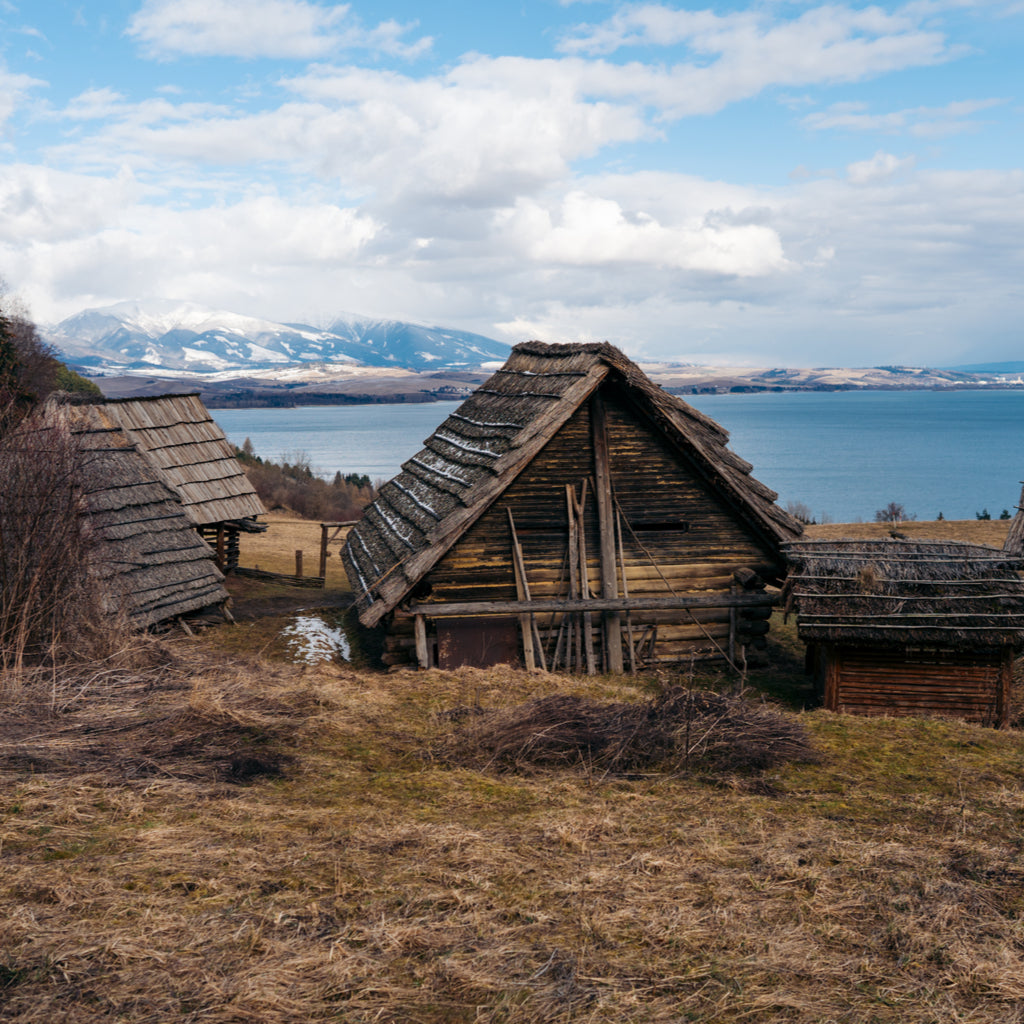
According to Faroese tradition, Grímur Kamban was the first settler in the Faroe Islands, around 825.
862: The Beginning of the Rurik Dynasty.
The Rurik dynasty began in 862. Rurik arrived with his brothers and a large entourage and became the first ruler of Novgorod. Many historians place Rurik's origins in Scandinavia or Jutland, and he is said to have held Ladoga first. Rurik is counted as the founder of the dynasty that ruled Kievan Rus', the medieval state from which Russia, Ukraine, and Belarus all trace their origins.
872: The Timeline of the Fairhair Dynasty.
The Fairhair dynasty was the family of kings founded by Harald Fairhair, the first king of Norway. Harald united much of Norway into one realm after the Battle of Hafrsfjord, traditionally dated to 872, though some historians place it as late as 885. He held firm control over Norway's western coast but had less authority in other parts of the country.
911: Duchy of Normandy.
The Vikings started raiding up the Seine river in 820. Over the next nine decades, they raided the area numerous times and even made tiny settlements on the lower Seine. After King Charles III (Charles the Simple) and the Viking leader Rollo signed the 911 Treaty of Saint-Clair-sur-Epte, the Duchy of Normandy was established. The duchy got its name from the Normans, its inhabitants.
961: The Timeline of Sonatorrek.
Sonatorrek is a poem of 25 stanzas preserved in Egil's Saga, the Icelandic saga about the life of the warrior-poet Egill Skallagrimsson.
982: The Settlement of Greenland.
When Erik was exiled from Iceland around 982, he decided to explore the coast to the west. He named the country Greenland because he believed a good name would attract settlers. He was the father of Leif Erikson, the first European to reach North America, around the year 1000.
1016: King of England.
Canute, better known as Cnut the Great, became king of England in 1016, of Denmark in 1018, and of Norway in 1028, building a North Sea empire that may have reached into parts of Sweden. He died in 1035, probably in his forties. Details of Canute's early life remain unclear because the written record is thin.
1030: The Spread of Christianity.
The Battle of Stiklestad is one of the most important battles in the history of Norway. It is believed to have been fought in July 1030 in central Norway, and it was where the Viking king Olav Haraldsson was killed. Olav was born in Norway in 995, as Christianity was spreading through Scandinavia. In his youth he took part in Viking expeditions in areas such as Great Britain and northern France.
Olav was baptized into Christianity in 1014. His religious code of 1024 is considered Norway's first national legislation. In Sweden, an exceptionally high number of churches are dedicated to Olav.
1066: The End of the Viking Age in England.
The Battle of Stamford Bridge between King Harald Hardrada of Norway and King Harold of England was fought in 1066. The fighting was violent and brutal, and losses on both sides were heavy. The Battle of Stamford Bridge is traditionally considered the end of the Viking era in England.
1171: The End of the Viking Age in Ireland.
With the backing of Pope Adrian IV, King Henry II of England took over Ireland with his large fleet. Many in Ireland accepted King Henry II because he offered the protection that Irish kings needed at the moment, and Norse Dublin passed under English control.
1240: The Fall of Kyiv.
The Mongol horde, led by Batu Khan, sacked Kyiv in 1240. After the attack, the princes of the Rurik dynasty were forced to seek a patent from the Mongol khan to rule as grand princes. The fall of Kyiv ended the old Kievan Rus' as a power, though Rurikid princes continued to rule in Russia for centuries afterward.
1263: The Battle of Largs.
The Battle of Largs was a small battle between the Scottish and Norwegian kingdoms. It ended inconclusively, since neither army achieved its primary aim, and Norway gave up the Hebrides soon after.
The Most Famous Viking
The most famous Viking leader is Ragnar Lodbrok. The sagas credit him with raids across France and England, a tragic death in a snake pit, and powerful sons: Halfdan, Ivar the Boneless, and Hubba. His sons led the Great Heathen Army that landed in East Anglia in 865. Whether Ragnar Lothbrok was a real man or a legend built around several 9th-century figures is still debated, since the stories about him were written long after his time.
Ragnar was a Dane. The Danes were a tribe inhabiting southern Scandinavia, first mentioned in written sources in the sixth century. During the Viking Age, the word 'Dane' became synonymous with the Vikings who raided and invaded across Europe.
The Most Feared Viking

We can say that Erik the Red was the most feared Viking. He left Norway as a child, moving to Iceland with his father after the family was exiled. Later, Erik himself was forced to leave Iceland. After that, he began to investigate the land to the west.
Erik earned his nickname from his red hair and beard, but it also fit his violent character. He was a formidable fighter. Erik explored the western coasts for about three years, leaving his mark on the names of the places he visited. He convinced many people that Greenland was an excellent opportunity. In 985, he left Iceland with a fleet of 25 ships to settle Greenland.
Erik succeeded in moving hundreds of men and women, their livestock, and their equipment to Greenland. Many ships were not suited to such a harsh voyage, so some turned back or were lost at sea in bad weather. However, 14 ships arrived in Greenland. The settlers established two colonies, the Eastern Settlement and the Western Settlement, with many small farms in between. According to the sagas, a fall from his horse kept Erik from joining his son's voyage west, and he died soon after the turn of the millennium.
Cnut the Great - One of the Great Viking Kings
Cnut the Great left a significant mark on the history of England and Scandinavia, but his battles and his skill as a ruler remain under-appreciated and barely studied.
He led his kingdom to stability after years of war. Denmark, Norway, and possibly parts of Sweden came under King Cnut's control.
He died in 1035, and his son Harold Harefoot inherited the kingdom. Harthacnut, Cnut's other son, later took the throne, but his death in 1042 marked the end of Danish rule in England. Cnut's impact is still a mystery to many, partly for lack of written evidence, and many people don't know that England was once part of a North Sea empire under his control.
The Last Great Viking Leader - Harald Hardrada
Harald Sigurdsson was born in 1015. As a teenager he fought at the Battle of Stiklestad in 1030 beside his half-brother, King Olaf II, who had been driven from Norway by Cnut the Great. Olaf was killed there, and the wounded Harald escaped with his life.
His invasion of England in 1066 indirectly helped William, Duke of Normandy, known as William the Conqueror. King Harold's English army marched north and destroyed Hardrada's force at Stamford Bridge, then had to rush south, exhausted, to face William at Hastings less than three weeks later. Harald Hardrada is remembered as the last great Norse king.
What Happened to the Vikings?
Viking raids dominate the written record of the Norse world. In historical documents, the raiders were called Northmen, the people who came from the northern countries. The end of the age is traditionally marked in England by the failed invasion of Harald Hardrada, king of Norway, at the Battle of Stamford Bridge in 1066.
We don't know what happened to the last Vikings in Greenland. Elsewhere, the raids stopped because Europe changed: conquest became less desirable, less profitable, and more complex. In time, most European kingdoms also built armies capable of defeating the Vikings. As time passed, the raids faded into the past, and just like that, the Viking era was gone.
However, the Vikings still live on through stories, documents, and their legacy. The Norsemen continued to live in Scandinavia and in the settlements founded during the Viking era, in Iceland and Greenland, but in a whole new era.
Until our next meeting,
Skål!
Keep exploring: how the Vikings operated as traders and explorers on their voyages of exploration, or shop our Viking jewelry collection.
Viking History Timeline FAQ
When did the Viking Age begin and end?
The Viking Age is conventionally dated from the 793 raid on Lindisfarne to 1066, when the Battle of Stamford Bridge marked the end of major Viking activity in England. Viking influence continued a bit longer in some regions, such as Ireland, into the 1170s.
What was the first Viking raid?
The earliest documented raid was on the Isle of Portland in Dorset in 787, though the 793 raid on the monastery at Lindisfarne is the most famous and best-recorded early attack.
Who was the most famous Viking?
Ragnar Lothbrok is usually named the most famous Viking leader, but his historicity is debated since the sagas describing him were written long after he supposedly lived, so many historians treat him as part legend.
Why are Viking timeline dates not always precise?
Much of what we know comes from Icelandic sagas written hundreds of years after the events they describe, so dates in many cases are best estimates rather than exact contemporary records.