
-
Hand-Forged Viking Hatchet “Vill Gustus” with Leather Cover
Regular price From $233.99 USDRegular price -
Hand-Forged Viking Hatchet “Skarpt Nebb” with Leather Cover
Regular price From $182.85 USDRegular price -
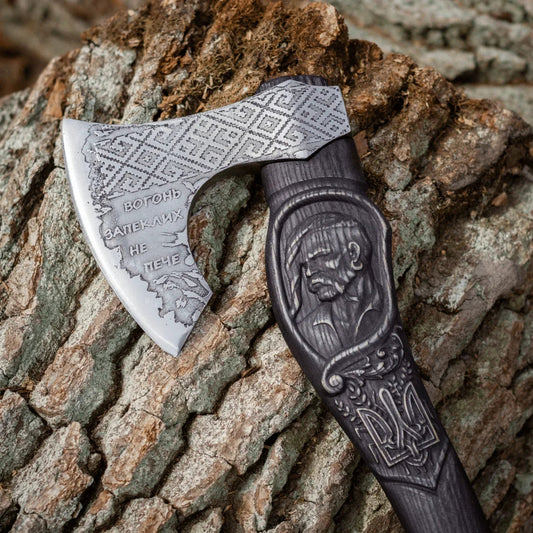
Kozak Cossack-Style Axe – Handmade, Hand-Forged
Regular price $288.00 USDRegular price -
Sterk Vorley Viking Axe – Hand-Forged with Leather Cover
Regular price $238.00 USDRegular price



A Buyer's Guide to Viking Axes
The axe was the defining weapon and everyday tool of the Viking Age. Cheaper and faster to forge than a sword, it was carried by nearly every free Norseman, used to fell trees and build longships as readily as to fight. That is exactly why a Viking axe still feels so authentic today: it is the tool that built and defended the Norse world. Below is everything you need to choose the right one.
Which shape should you buy?
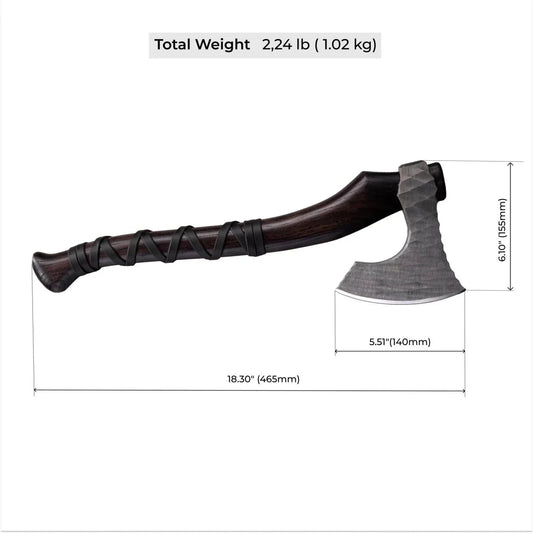
Four shapes cover almost everything on this page. The bearded axe (Skeggøx) is the iconic one-handed Viking profile and the safest first pick. The Dane axe (breiðøx) is the long two-handed weapon built for reach. Twin-bladed heads like our hand-forged "Havamal" battle axe are a modern design, and you will find them together in our double-headed axes. A hand axe or hatchet suits camp and bushcraft use, and a purpose-built throwing axe is tempered and balanced for the target. For the full historical breakdown, including the Petersen typology and the francisca, see our illustrated guide to the types of Viking axes.
Functional or display?
Some of our axes are battle-ready and fully functional, forged and heat-treated to hold an edge for cutting, splitting and throwing, like our hand-forged axe with a decorated head and carved handle. Others are detailed display and collector's pieces for the wall or the mantel. Each product page states which it is, so you always know what you're getting.
What counts as a real Viking axe?
Original Viking Age axe heads are rare and mostly sit in museums, so a real Viking axe you can buy today is a modern forged axe, not a cast or painted decoration. Look for a hand-forged head, a hardwood handle and a product page that says plainly whether the axe is functional or for display. Single-bladed bearded and Dane heads stay closest to the real Viking shapes. Axes modelled on video games, such as Kratos's Leviathan from God of War, are modern fantasy designs rather than Viking Age shapes; you'll find them together in our Leviathan axe collection.
Steel, handles & care
High-carbon steel (such as 1045/1095) takes and holds a keener edge and is the choice for functional axes, but it will rust if neglected, keep it lightly oiled. Stainless steel resists corrosion and is ideal for display and everyday wear. Handles are turned from hardwoods like ash, oak or hickory for shock resistance. For the full routine, see our Viking axe care guide.
How to choose your Viking axe
Want a first Viking axe or a gift? A bearded Skeggøx is the iconic, versatile pick. After reach and presence? Go for a Dane or battle axe. Buying for the trail or the throwing target? Choose a hand axe or a purpose-built throwing axe. For deeper background, read our guides on what a bearded axe is and the meaning of the axe in Norse symbolism.
QUESTIONS