


Odin's Raven Viking Seax Knife – Hand-Forged Carbon Steel
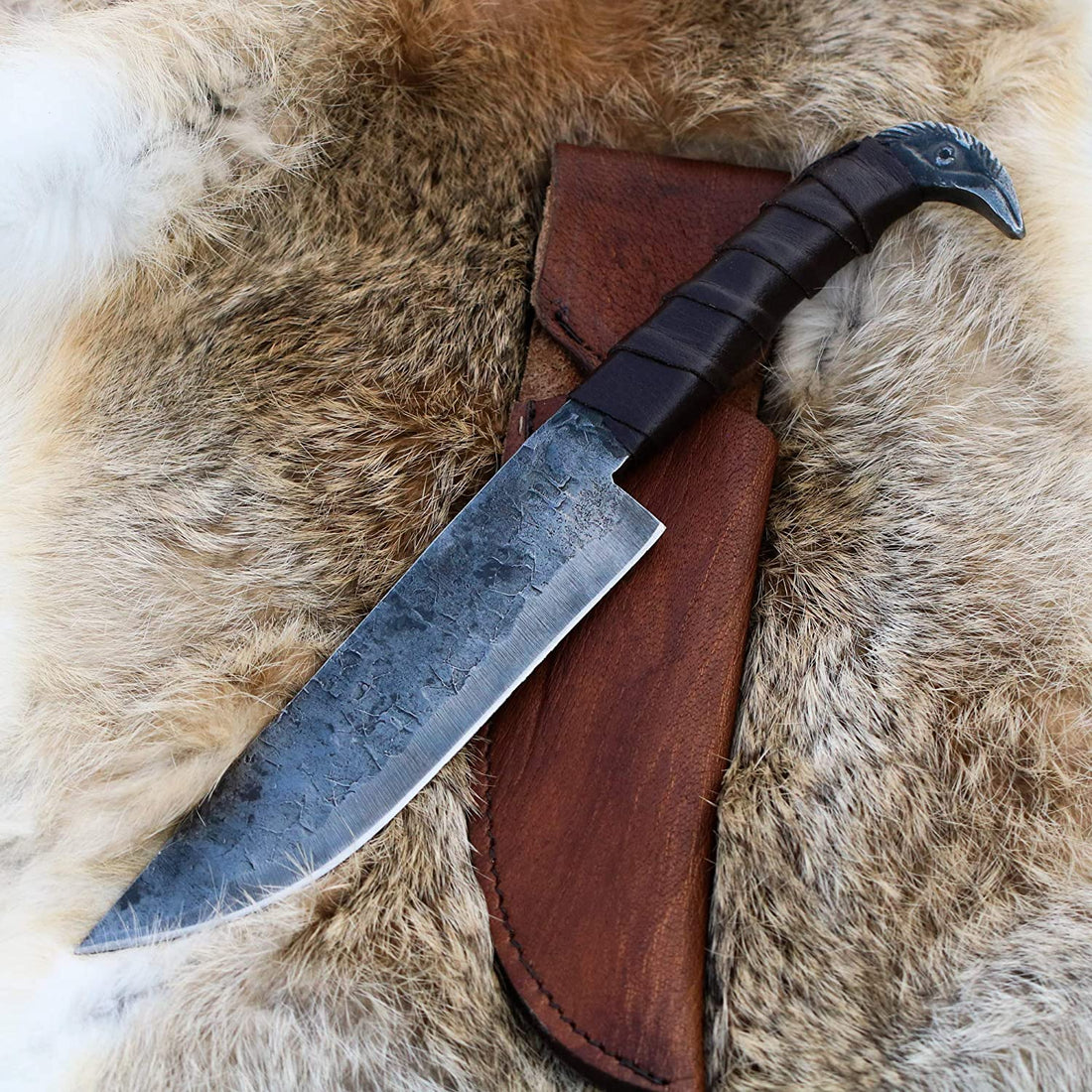
A hand-forged Viking seax knife with a 6.5-inch carbon steel blade, a leather-wrapped grip and a cast raven's head pommel, carried in a handmade cowhide leather sheath. It measures 10.3 inches overall and is sold as a hunting and collector's knife, not a kitchen knife.
 PREVIEW · Latin ·
Illustration only — final size and placement follow the blade you choose. See all personalized Viking blades.
Where this one sits among seaxes
"Seax" covers a whole family of single-edged blades, from a palm-length work knife up to the langseax, which is closer to a short sword. This one lands in the middle of that range: long enough to have real presence, short enough to wear on a belt without it becoming a costume piece. The spine runs straight and drops to the point, and the edge is on one side only — the working geometry that defines the form. If you want the background, we wrote a full guide to what a seax actually is.
Huginn and Muninn on the pommel
The cast raven's head is not decoration for its own sake. Odin kept two ravens, Huginn ("thought") and Muninn ("memory"), and in the poem Grímnismál he says they fly out over the world each morning and return to him — and that of the two, it is Muninn he fears most for. A raven on a blade is a nod to the god who traded an eye for knowledge, not simply to a bird.
Who it's for
Collectors building out a Norse or medieval display, reenactors who want the right silhouette on the belt, and anyone looking for a gift with more behind it than a novelty. Every blade is worked by hand, so hammer marks, forge texture and small differences between pieces are part of it — no two are the same, and that is the point.
See the rest of the range in our Viking seax collection, or compare it with the smaller Boar's Head seax.
This is a hunting and collector's knife. It is not intended for kitchen or cooking use — handle, store and carry it responsibly and in line with your local laws.


Every part earns its place
A single-edged blade forged by hand from carbon steel, left with its hammer marks and dark forge texture instead of being polished flat. The straight spine runs the length of the blade and drops to the point — the working shape the Norse and Anglo-Saxons carried on the belt every day. The grip is wrapped in dark leather and finished with a cast raven's head for Huginn and Muninn, Odin's two ravens.


Carbon steel is alive — treat it so
High-carbon steel holds a keener edge than stainless, but it will spot with rust if left wet. Two minutes of care keeps this blade in the family for generations.

This is a working tool. It arrives sharp and can be re-sharpened like any carbon blade. Choose the Display edge if you want it purely for the wall — same steel, left unsharpened for safe handling.
Sold to adults 18+. A signature and ID may be required on delivery. Bladed goods can't ship to some regions — the cart flags restricted addresses at checkout. Full policy in our shipping guide.
Questions about this blade
Straight answers — the same ones we give over email.
What is a seax knife?
A seax is a single-edged knife carried by the Norse and Anglo-Saxons, running from a small belt knife up to a short sword. This one, at 10.3 inches overall with a 6.5-inch blade, sits in the everyday belt-knife range.
How big is the Odin's Raven seax knife?
The blade is 6.5 inches (165 mm) and the knife measures 10.3 inches (262 mm) overall.
What do the ravens on the hilt represent?
The cast raven's head stands for Huginn and Muninn, Odin's two ravens. In Norse myth they fly across the world each day and bring back to him everything they have seen and heard.
What sheath does it come with?
A handmade cowhide leather sheath with a belt loop is included with every knife.
How do I care for a hand-forged carbon steel blade?
Carbon steel takes and holds a keen edge but it is not stainless. Wipe the blade dry after use, keep a light film of oil on it, and store it out of the sheath long term so moisture is not held against the steel. A darker patina forming over time is normal.