
Viking Clan Names: What the Norse Actually Had Instead


There were no Viking clans and there were no Viking clan names. The Scottish clan, with its name, chief and territory, is a different institution from a different culture. What the Norse had was the ætt, and it worked in another way entirely.
Build an authentic Norse name instead, or read on for the full lists.
What an Ætt Was
Ætt means family, lineage or descent. Crucially it was bilateral: you belonged to your mother's kin as much as your father's. That single fact rules out the clan model, because a clan requires a single line of descent to be the line that counts.
Your ætt was who owed you support in a feud, who inherited from you, who paid or received compensation when blood was spilled. It was the most important social unit in Norse life. It simply did not have a name.

How Kin Groups Were Actually Identified
| Method | Example | Notes |
|---|---|---|
| By ancestor | the sons of Ragnarr, the kin of Ketill | the commonest form in the sagas |
| By farm | Hvamm-Þórir, the Þórir of Hvammr | a place fixed to a person |
| By district | the men of Borgarfjörðr | used for collective action |
| By a founder | the Mýramenn, from Mýrar | named for the land, not the bloodline |
If You Want a Name for Your Group
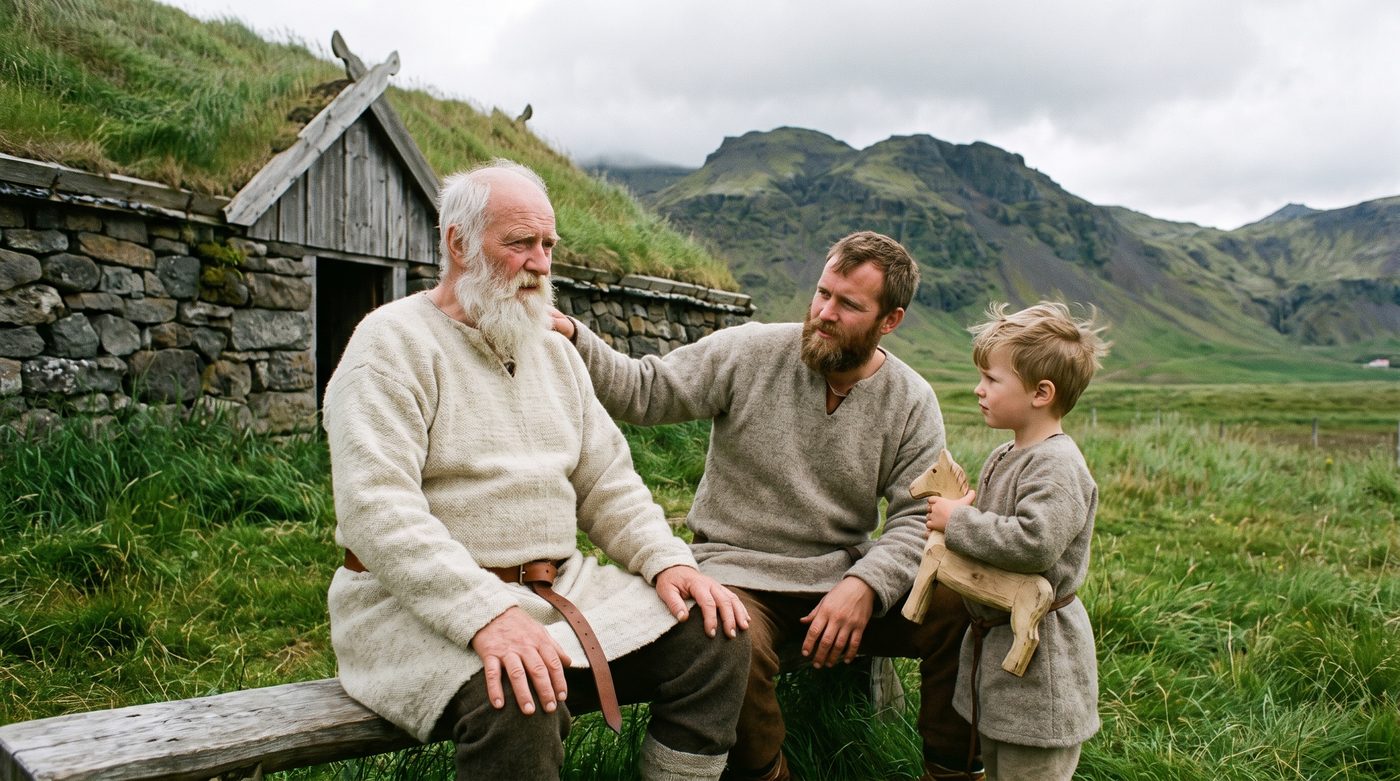
The historically defensible options are to name yourselves after a real ancestor figure, or after a place, using the genuine Norse pattern rather than an invented clan word. A group calling itself the kin of a named forebear is doing exactly what the sagas do.
The names below are attested and can carry that role.
| Name | Meaning | Attested in |
|---|---|---|
| Óláfr | ancestor's descendant | Landnámabók |
| Þórsteinn | Þórr's stone | Landnámabók |
| Þórgeirr | Þórr's spear | Landnámabók |
| Þórvaldr | Þórr's ruler | Landnámabók |
| Þórbjörn | Þórr's bear | Landnámabók |
| Þórfinnr | Þórr's Finn | Landnámabók |
| Þórgrímr | Þórr's mask | Landnámabók |
| Þórkell | Þórr's helmet | Landnámabók |
| Þóroddr | Þórr's spear-point | Landnámabók |
| Þórarinn | Þórr's hearth | Landnámabók |
| Þórir | of Þórr | Landnámabók |
| Björn | bear | Landnámabók |
| Sigurðr | victory-guardian | Völsunga saga |
| Haraldr | army-ruler | Heimskringla |
| Hákon | high son | Heimskringla |
| Eiríkr | ever-ruler | Heimskringla |
| Ívarr | yew-warrior | Heimskringla |
| Ketill | helmet, cauldron | Landnámabók |
| Grímr | mask, helm | Landnámabók |
| Gunnarr | battle-warrior | Njáls saga |
| Egill | edge, blade | Egils saga |
| Njáll | champion (Gaelic loan) | Njáls saga |
| Kári | curly-haired; squall | Njáls saga |
| Skarphéðinn | sharp fur-cloak | Njáls saga |
| Höskuldr | grey-haired | Laxdæla saga |
| Hrútr | ram | Njáls saga |
| Flosi | chieftain | Njáls saga |
| Ásgrímr | god-mask | Njáls saga |
| Snorri | attack, onslaught | Eyrbyggja saga |
| Arnkell | eagle-helmet | Eyrbyggja saga |
| Steinþórr | stone-Þórr | Eyrbyggja saga |
| Illugi | of ill mind | Grettis saga |
| Ásmundr | god-protection | Grettis saga |
| Grettir | the snarler | Grettis saga |
| Atli | little father | Njáls saga |
| Önundr | the winner | Grettis saga |
| Gísli | hostage, pledge | Gísla saga |
| Vésteinn | sacred stone | Gísla saga |
| Bárðr | battle-warrior | Landnámabók |
| Auðunn | wealth-friend | Landnámabók |
| Hallr | rock | Landnámabók |
| Sturla | the unruly | Sturlunga saga |
221 more attested names are in the name generator, each with its meaning and source.

The Individual Name Is the Real Thing
Since the culture put its identifying weight on the individual rather than the family, the parts to get right are the given name, the byname and the patronymic. See Viking last names for how patronymics form, and Viking bynames for the descriptive part.
Since the Norse had no clan names, identity ran through the given name and the patronymic instead. That system is set out in our guide to Viking names.
Frequently Asked Questions
Did Vikings have clans?
Not clans in the Scottish sense. The Norse kin group was the ætt, a bilateral family reckoned through both parents, and it had no clan name, no tartan and no chief in that sense.
What is an ætt?
Ætt means family, lineage or descent. It is the Norse kin group, and it mattered enormously for feud, inheritance and legal support, but it was not a named clan.
How were Norse family groups identified?
By descent from a named ancestor, by the farm they held, or by district. Groups are described in the sagas as the men of Hvammr or the sons of a particular man, not by a clan name.
So Viking clan names are invented?
Modern Viking clan names are invented, yes. What is real is the ætt, the ancestor-based naming of kin groups, and the farm and place names the sagas actually use.